Blog
Why Standard Cases Fail in Large Organizations
What a company-managed phone contract reveals about end-to-end ownership
Blog
Why Standard Cases Fail in Large Organizations
What a company-managed phone contract reveals about end-to-end ownership
Date:
December 20, 2025
Domains:
Quality
A very ordinary situation
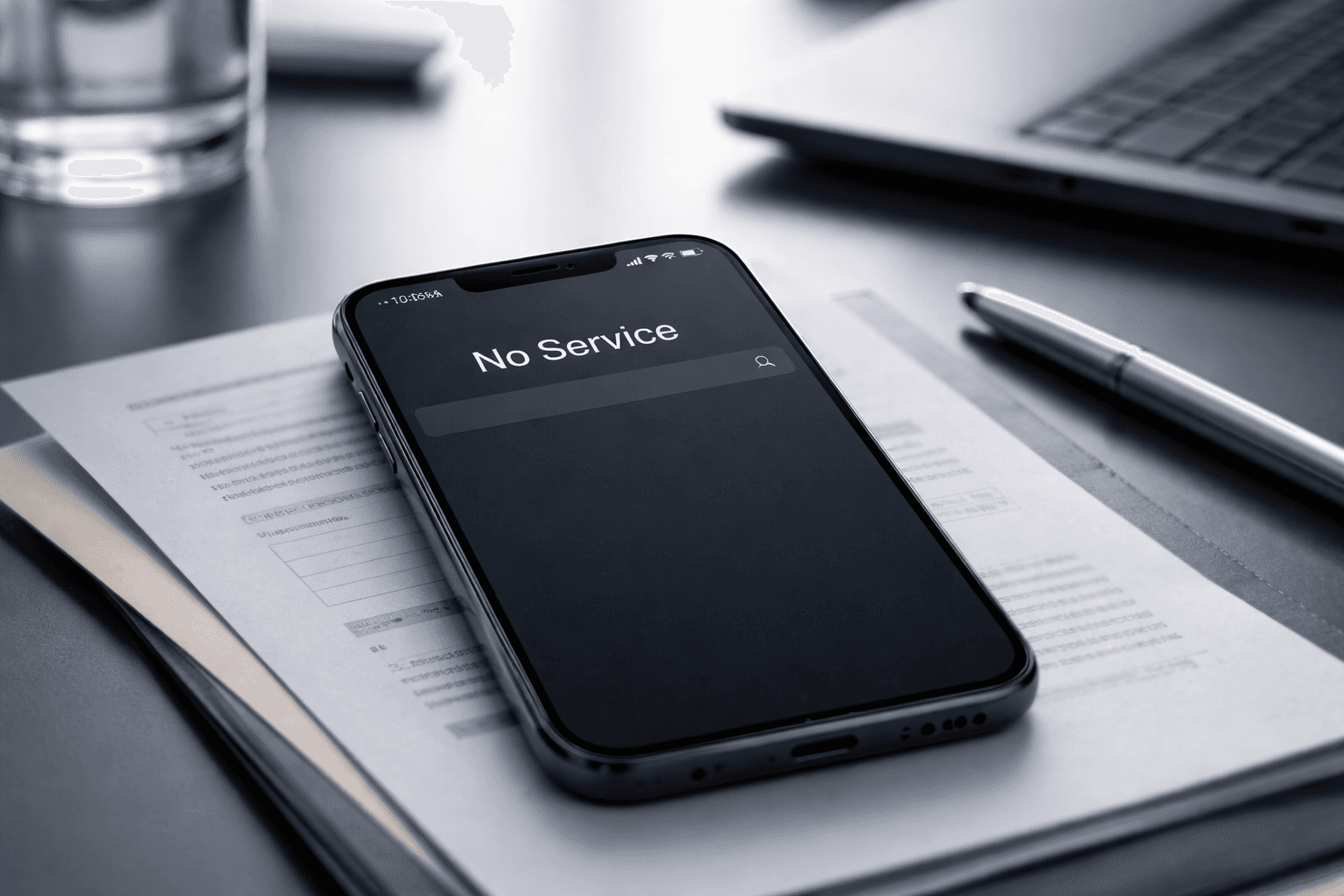
An employee leaves a company after several years. During their employment, they used a company-managed mobile phone contract, including a phone number that has become deeply embedded in both professional and personal life. When the employment ends, the number is meant to be transferred out of the corporate contract so it can continue to be used privately.
This is a routine situation. Employee turnover is normal. Company phone contracts are ubiquitous. Such transitions happen continuously in large organizations.
And yet, what follows is not a smooth handover.
The former employee contacts support and is given instructions. Forms are filled in. Waiting periods are suggested. Another channel is tried. Each interaction is polite, professional, and seemingly reasonable. But weeks later, the situation has not changed. The phone number is still locked inside the corporate contract, unable to move to its next state.
No one appears to be doing anything wrong. And still, the system fails.
When “standard” is treated as exceptional
Internally, situations like this are often framed as special cases. They sit between domains: corporate contracts on one side, private subscriptions on the other. Responsibility feels diffuse. Each team handles what it recognises as “its part”.
From an organizational perspective, this framing feels plausible.
From a factual perspective, it is misleading.
Employees leave organizations every day. Company-managed phone numbers must be transitioned regularly. This is not an edge case in terms of frequency. What makes it fragile is not rarity, but the absence of clear end-to-end ownership.
The case is standard in reality, but exceptional in how responsibility is assigned.
Local correctness, global failure
Looking closely, every individual interaction works as designed. The retail channel follows its procedures. The hotline provides correct information. The forms are valid. The systems reflect expected statuses.
Each step, taken in isolation, is correct.
The failure emerges only when viewed end to end. Responsibility ends at organizational boundaries. No one is accountable for ensuring that the phone number actually becomes transferable. Progress stalls without triggering escalation, because from the perspective of each unit, nothing is obviously broken.
For the customer, however, none of this matters. They do not experience departments or systems. They experience a phone number that will not move.
This is the defining pattern of many large-organization failures: locally optimized processes that collectively fail to produce a usable outcome.
Why quality management often doesn’t catch this
Cases like this are particularly difficult for traditional quality management systems to detect. There is no single procedural violation. There is no obvious error log. Each unit can demonstrate compliance with its defined responsibilities.
Complaints may be handled operationally, but they rarely trigger a deeper analysis. They are treated as individual incidents rather than as signals of a systemic pattern.
The result is a blind spot. The same failure can repeat many times without leading to structural correction, because no single process appears to be “at fault”.
What is missing is not documentation or effort. It is ownership across the full lifecycle of the case.
What an end-to-end perspective would change
An end-to-end view would shift the focus away from individual steps and towards outcomes. Instead of asking whether each unit followed its procedure, it would ask whether the transition actually completed.
It would make someone explicitly responsible for the final state of the phone number. It would define when a stalled case is actively taken over rather than passed along. It would treat recurring transition failures as data, not as noise.
These are not primarily technical questions. They are governance questions.
The broader lesson
The failure of a company-managed phone contract to transition into private use is not remarkable because it is unusual. It is remarkable because it is entirely ordinary.
Standard cases fail in large organisations not because people are careless or incompetent, but because responsibility dissolves at boundaries. Until organizations design explicitly for these boundaries, the most predictable situations will continue to produce the most frustrating outcomes.
Fixing this does not require heroic effort. It requires acknowledging that end-to-end ownership is not an optional refinement, but a prerequisite for reliability.
A very ordinary situation
An employee leaves a company after several years. During their employment, they used a company-managed mobile phone contract, including a phone number that has become deeply embedded in both professional and personal life. When the employment ends, the number is meant to be transferred out of the corporate contract so it can continue to be used privately.
This is a routine situation. Employee turnover is normal. Company phone contracts are ubiquitous. Such transitions happen continuously in large organizations.
And yet, what follows is not a smooth handover.
The former employee contacts support and is given instructions. Forms are filled in. Waiting periods are suggested. Another channel is tried. Each interaction is polite, professional, and seemingly reasonable. But weeks later, the situation has not changed. The phone number is still locked inside the corporate contract, unable to move to its next state.
No one appears to be doing anything wrong. And still, the system fails.
When “standard” is treated as exceptional
Internally, situations like this are often framed as special cases. They sit between domains: corporate contracts on one side, private subscriptions on the other. Responsibility feels diffuse. Each team handles what it recognises as “its part”.
From an organizational perspective, this framing feels plausible.
From a factual perspective, it is misleading.
Employees leave organizations every day. Company-managed phone numbers must be transitioned regularly. This is not an edge case in terms of frequency. What makes it fragile is not rarity, but the absence of clear end-to-end ownership.
The case is standard in reality, but exceptional in how responsibility is assigned.
Local correctness, global failure
Looking closely, every individual interaction works as designed. The retail channel follows its procedures. The hotline provides correct information. The forms are valid. The systems reflect expected statuses.
Each step, taken in isolation, is correct.
The failure emerges only when viewed end to end. Responsibility ends at organizational boundaries. No one is accountable for ensuring that the phone number actually becomes transferable. Progress stalls without triggering escalation, because from the perspective of each unit, nothing is obviously broken.
For the customer, however, none of this matters. They do not experience departments or systems. They experience a phone number that will not move.
This is the defining pattern of many large-organization failures: locally optimized processes that collectively fail to produce a usable outcome.
Why quality management often doesn’t catch this
Cases like this are particularly difficult for traditional quality management systems to detect. There is no single procedural violation. There is no obvious error log. Each unit can demonstrate compliance with its defined responsibilities.
Complaints may be handled operationally, but they rarely trigger a deeper analysis. They are treated as individual incidents rather than as signals of a systemic pattern.
The result is a blind spot. The same failure can repeat many times without leading to structural correction, because no single process appears to be “at fault”.
What is missing is not documentation or effort. It is ownership across the full lifecycle of the case.
What an end-to-end perspective would change
An end-to-end view would shift the focus away from individual steps and towards outcomes. Instead of asking whether each unit followed its procedure, it would ask whether the transition actually completed.
It would make someone explicitly responsible for the final state of the phone number. It would define when a stalled case is actively taken over rather than passed along. It would treat recurring transition failures as data, not as noise.
These are not primarily technical questions. They are governance questions.
The broader lesson
The failure of a company-managed phone contract to transition into private use is not remarkable because it is unusual. It is remarkable because it is entirely ordinary.
Standard cases fail in large organisations not because people are careless or incompetent, but because responsibility dissolves at boundaries. Until organizations design explicitly for these boundaries, the most predictable situations will continue to produce the most frustrating outcomes.
Fixing this does not require heroic effort. It requires acknowledging that end-to-end ownership is not an optional refinement, but a prerequisite for reliability.
Conclusion
Standard cases fail in large organizations not because they are rare or complex, but because responsibility dissolves at organizational boundaries.
When no one owns the outcome end to end, locally correct processes can still produce globally unusable results. Improving reliability does not start with more procedures or better tools, but with explicit ownership for transitions, especially the ones that are assumed to be “routine”.

Dr. Dominik Langer
CEO & Founder
Dr. Dominik Langer
CEO & Founder
Dr. Dominik Langer
CEO & Founder
Follow us on social media:

Blog
More insights
Blog
More insights
Blog
More insights
Recent articles and perspectives on management systems, governance, and effective practice.


Ready to improve your management systems?
We support continuous improvement by embedding ISO requirements into everyday practice and daily operations.
Ready to improve your management systems?
We support continuous improvement by embedding ISO requirements into everyday practice and daily operations.
Ready to improve your management systems?
We support continuous improvement by embedding ISO requirements into everyday practice and daily operations.